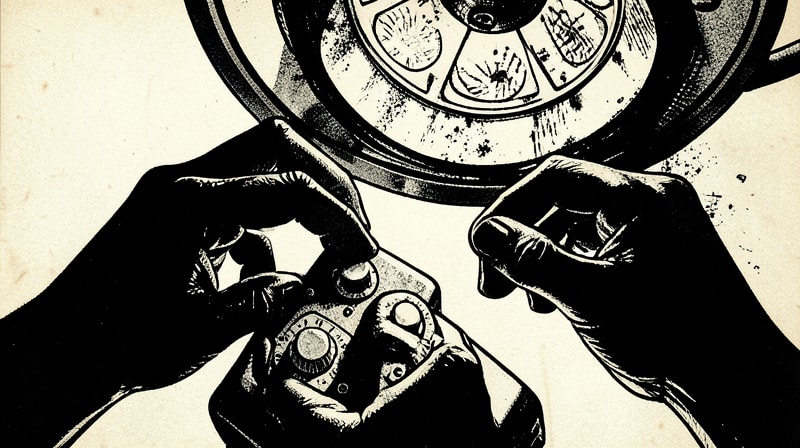

The anaesthetist cracked a joke three minutes after they put me under. I know because I read the surgical notes later. The timing matters. There is a window between sedation as promised and sedation as experienced, and in that window the room changes register entirely. The patient who was a person thirty seconds ago becomes a body on a table, and everyone relaxes.
I have been that body more times than I can count. A T6 spinal cord injury means damage at a specific level of the spine, and it means surgical interventions stack up: initial repair, hardware adjustments, nerve blocks, and peripheral fixes (smaller surgeries on the limbs and extremities) that accumulate around the central fact. Each time, the same script. The nurse who holds your hand until the IV goes in. The surgeon who appears for ninety seconds to confirm which side, which level, which approach. Then: countdown, dark, gone. You wake up somewhere else and time has moved without you.
Sometimes the sedation is its own relief — the nerve block that finally quiets the screaming signals, the moment your body lets the repair happen. Sometimes you wake up and something actually works better. But what nobody tells you is that the room you left and the room you woke up in are not the same place. Same walls, same equipment, different atmosphere entirely. In the first room you are a participant. In the second you were a problem to be managed. The casual warmth that filled the room while you were unconscious — the banter, the music, the ease — was not available to you when you were awake and frightened. It became available the moment you could no longer consent to it.
That Guardian piece this week, “What I’ve Learned in Operating Theatres,” featured a surgical assistant describing her surprise at operating-room culture and the relief she felt discovering it was less formal and terrifying than she expected. She arrived anxious, prepped for formality, and found instead a room full of people being human with each other. Music playing. Jokes. Lunch plans. She was relieved. I read it and thought: yes, and the patient was not conscious for any of that.
You know the feeling — when you’re in the pre-op bed and you can see everything but hide from nothing. The privacy curtain that doesn’t actually block sound. The gown that leaves you exposed. The way everyone can observe you but you can’t retreat. In the operating theatre, this gets turned up to maximum. You are placed under observation — literally, under observation — and then unable to perceive your experience. You stop being aware of what is happening to your own body. The people in the room remain conscious, in conversation, in the world. You do not. Hours have passed that you cannot remember. The gap in your memory is the evidence that something was done to your body while you were not there to experience it.
I get why surgical teams need their casual atmosphere — the jokes that break tension during a ten-hour procedure, the music that helps them focus through repetitive work. They’re human. They need to survive their workday. And maybe some patients would panic hearing laughter while someone cuts into them. But there’s something brutal about waking up and realizing the warmth in the room arrived only after you were no longer there to experience it.
In 2019 I asked an anaesthetist why they wait until you are sedated — under anesthesia — to turn the music on. He said they do not wait — it is on the whole time, just quieter before induction. Quieter, he said, because patients find it distressing. The music is for us, not you. Once you are gone, we turn it up.
I thought about this for a long time. The room has two versions. One is performed for the patient: calm, procedural, distanced. The other is the room as it is: people doing repetitive skilled work under pressure, managing that pressure with the social tools available to any workplace. Jokes. Music. The anaesthetist who makes the same pun every time because it breaks the tension. The surgical assistant learning that this is how it is done.
The gap between those two versions is not cruelty. It is necessity. You cannot have a room full of people holding the emotional pitch required to meet a frightened patient at their level of fear for six, eight, ten hours. The room would collapse. So the fear gets managed in a bounded window — the pre-op conversation, the consent form, the hand-holding until the IV takes — and then it is over. You leave, and the room returns to its default state, which is people working.
I understand why it has to be this way. I also know what it feels like to wake up and realise the room you were afraid in does not exist anymore. The warmth arrived after you left. The moment you were incapable of refusing anything, everyone got comfortable.
The surgical assistant in that Guardian piece described her relief that the room was not as terrifying as she had imagined. I am glad for her. I am also thinking about the body on the table, who spent the morning so anxious they could not drink coffee, who arrived at 7am to a building organised around turning them into an object that can be worked on. The casual workplace dynamics she found so welcome became available at the precise moment the patient could no longer experience them.
There is a version of accessibility that measures the door width and counts it done. There is another version that asks: who gets to be casual, and when, and at whose expense. The room is kind until you stop watching.