
Charlotte Jansen reviewed an exhibition of photography at the Deutsche Börse Prize competition and called it insufficiently elevated. The snapshots looked amateur. They resembled a Tumblr feed. The Perspex mounting wasn’t enough to make them interesting. I read the piece twice because I wanted to understand what “amateur” was doing in that sentence, and what work “interesting” was being asked to perform.
Amateur means: made by someone who has not been trained to make it correctly. The snapshot aesthetic — blurry edges, off-centre framing, inconsistent focus — signals that the person holding the camera did not have full control. Jansen is right that this is what the work looks like. But she misinterprets the meaning of that quality.
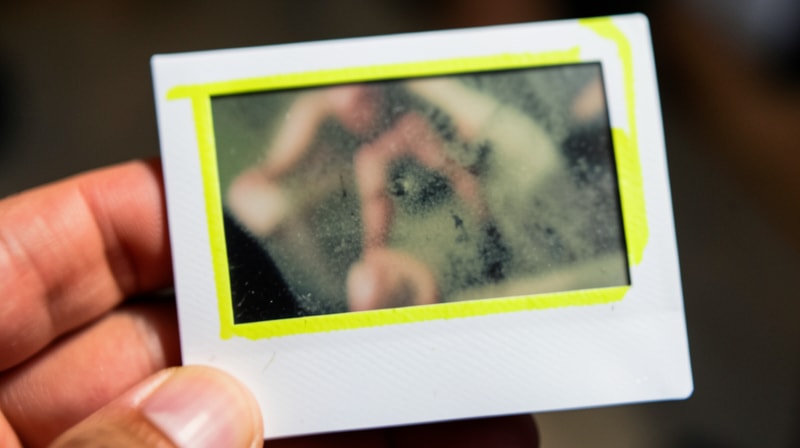
I cannot hold a camera steady for longer than four seconds. My hands shake. Not constantly, not dramatically, but enough that a long exposure is impossible and a tripod is not optional. I learned photography through the technical constraints my body gave me: fast shutter speeds, high ISO, compositions I can frame and capture before the tremor moves the lens. What I produce looks like what it is — images made by someone who cannot hold still.
I thought this was a problem I needed to solve. Then I saw Nan Goldin’s photographs — intimate, blurred images that broke conventional rules of sharpness — and realized the blur was not failure. It was the record of a hand that moved.
The snapshot rejects mastery. It refuses the controlled frame. It documents what happens when you do not have full command of the apparatus. You take the picture anyway. This is not an aesthetic choice in the sense of selecting one style over another. It is what making images looks like when your body or your attention or your resources do not allow you to meet the technical standard.
Jansen wants the images elevated. Mounted in Perspex is not enough. They need something more to justify themselves as art. But the entire argument of the snapshot is that elevation is the wrong frame. The Tumblr comparison is intended as a dismissal, but Tumblr in 2014 was a platform where photographers shared work directly with audiences when galleries, magazines, and institutions would not. Tumblr was where you went if the gallery would not show your work, if the magazine would not publish it, if the institution had already decided your life was not worth the serious gaze.
What Jansen is calling amateur is the visual grammar of people who were never supposed to be making images in the first place.
There is a history here that the review does not mention. Disability archives are full of snapshots — not because disabled people in the 1970s and 80s loved the amateur aesthetic, but because access to professional equipment, formal training, and gallery space was deliberately denied to disabled people by institutions and gatekeepers. A Polaroid or a disposable camera was what you could afford and operate and carry.
What survives is blurry. Off-centre. Technically inadequate by the standards Jansen is applying. Also: the only visual record we have of entire decades of disabled life that institutions refused to document.
The snapshot says: I was here, I saw this, I am showing you. The blur is not a failure of technique. It is proof the image was made by a hand that could not hold still, and made it anyway.
Jansen looked at this work and saw something that needed elevating. I looked at it and saw a form that has been carrying weight for fifty years, unrecognized. The Perspex is fine. The problem is the assumption that what looks amateur must be.