The Academy that awards the Oscars announced this week it will not accept AI-generated performances or scripts for Oscar consideration. The rule took effect immediately. What nobody mentioned: the decision only matters if you believe pattern recognition started this year.
I have been watching film editors work since I was twelve. My uncle cut commercials in a basement studio in Rotterdam. He had a wall of drives, each one holding variations of the same thirty-second spot. Seven takes of a woman opening a refrigerator. Fourteen angles on a hand pouring milk. He would scrub through them at double speed, marking the frames where her expression changed, where the light caught the glass, where the motion felt natural. He was building a pattern library. He did not call it that. He called it his archive.
In 2022, a visual effects supervisor named Ben Grossmann—a veteran of major Hollywood productions—told a room full of animators that machine learning had been embedded in film production software since 2016. He was not announcing a breakthrough. He was clarifying what people were already using without noticing. Rotoscoping tools, which trace around actors frame-by-frame to separate them from their backgrounds, isolated actors from backgrounds. Colour grading systems—the process of adjusting colors in video to achieve a consistent look—matched skin tones across fifteen different camera setups. Crowd replication algorithms that turned fifty extras into five hundred. All of it: pattern recognition applied frame by frame.
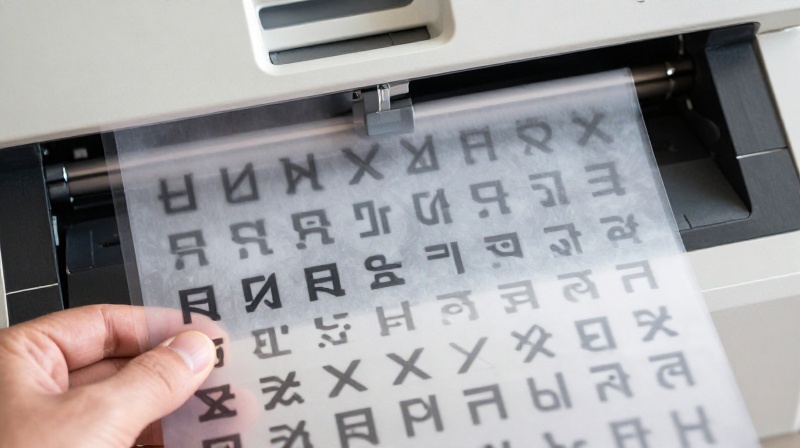
The thing people mean when they say AI actor is a specific subcategory: a synthetic face, a voice model, a body that never stood on set. But the broader system — the one that has been running quietly inside editing bays for a decade — works the same way my uncle worked. You feed it examples. It finds the logic. It applies that logic elsewhere.
I do this too. I watch people at bus stops. I catalog micro-expressions: the tightening around the eyes when someone checks their phone and sees bad news, the shoulder drop when they realize the bus is late, the head tilt that means they are about to ask a stranger for directions. I have been building this library since I was six. Nobody taught me. I needed it. Faces do not come with subtitles. You either learn the pattern or you guess wrong and people get annoyed and you don’t know why until three hours later when you are lying in bed reconstructing the conversation frame by frame.
The Oscars rule bans one kind of output. It does not touch the recognition system underneath. Because the recognition system is not new. It is what editing has always been: isolating the frame where the performance lands, the moment where the emotion resolves, the cut that makes two unrelated images into a sequence the viewer completes without being told.
My uncle retired in 2019. The drives are still in the basement.
This article was prompted by Most mainstream films already use AI. The new Oscars rules won’t stop that from The Conversation.