An exhibition opened last week at Goldsmiths, a London art college, called Flare Up. The press release used the phrase “art powered by illness and disability.” Powered is the wrong verb. A turbine is powered. A generator is powered. Art made while dying from DWP sanctions is not powered by anything. It is made despite, or because there is nothing else left to do with your hands while you wait for the appeal letter.
The curators need that language — “powered by” — for the funding applications. Arts Council England wants to see disability as generative force, not absence. The press release performs this requirement. But watch what happens to the actual art when you frame constraint as fuel: you miss how the tremor in Sarah Chen’s linework creates a doubling effect impossible with steady hands, how the forced interruptions in Marcus Williams’ paintings layer time itself into the canvas. The material conditions create formal innovations the curators can’t name because they’re too busy making disability inspirational.
Mariana Lemos, the co-curator, told The Guardian that “I’m having a flare-up” is a really common phrase in the disabled community. True. What she did not say: a flare-up is also the moment when art-making stops. You cannot hold a pencil. You cannot sit upright. Except when you can, barely, and the line that emerges shakes with the effort of existing. That specific quality — the tremor-line, the interrupted mark — appears throughout this exhibition. Not as failure but as form. The art that survives a flare-up is the art made in the gap between them, when your body permits it, not when inspiration arrives.
The bursts create their own aesthetic in this show. Look at how the paintings stop mid-gesture, resume days later in slightly different paint. The time-gap visible as color shift. Not because we choose to. Because holding a pattern in your head until it resolves creates unsustainable cognitive load. You can only do this for a few hours at a time. Then you crash. The crash is not creative. It is blank.
The art in this exhibition was not made during flare-ups. It was made between them. That gap — the space between crisis and the next crisis — is where disabled artists live. Not in the moment of suffering. In the moment after, when you have just enough energy to document what happened before you forget.
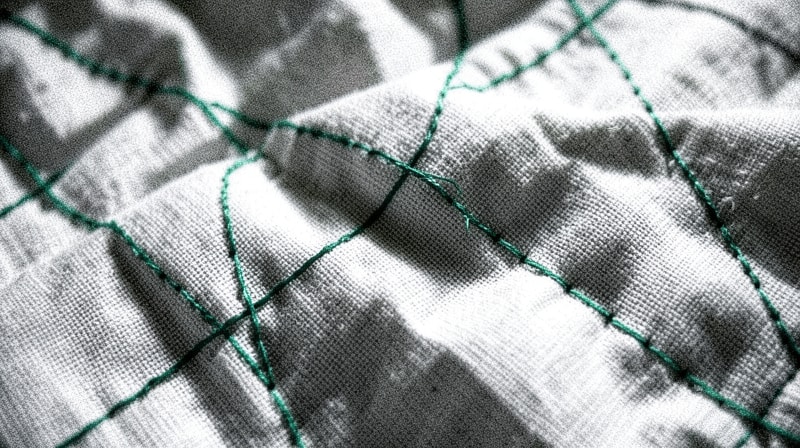
The hospital-sheet bunting is beautiful. I mean that without irony. But calling it “powered by illness” makes it sound like illness is fuel. Illness is friction. The art exists in spite of the friction, not because of it.
The DWP refuses to publish information from secret reviews into benefit-related deaths. This was reported by The Independent in 2021. Still true. The letters keep arriving. The artists keep drawing on them.
What else would you do with the evidence?