The Art Fund shortlist dropped this week and the phrase sat there in the middle of the sentence like a piece of furniture someone had moved but not explained. “An accessible castle in Norwich.” Five words. Adjective, noun, preposition, proper noun. The most technically ambitious project on a list that includes the National Gallery in London’s £30 million renovation, treated as a descriptor. As if someone had written “a brick building in London.”
I read that line three times. Not because I missed it. Because it was doing something I recognised.
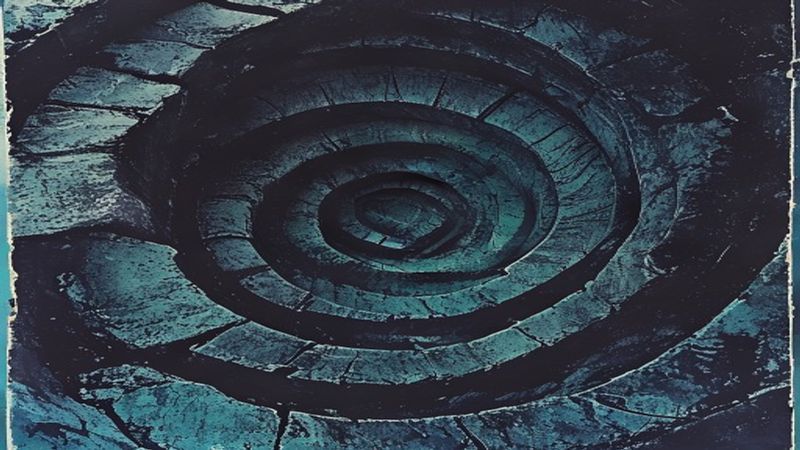
Norwich Castle reopened in 2024 after a £13.5 million transformation. The keep is a twelfth-century Norman structure sitting on a mound. Getting a wheelchair into it was not a matter of adding a ramp. The architects at Feilden+Mawson cut a new route through the mound itself, a spiral path descending through the original defensive earthwork, boring into the thing a castle was designed to prevent: easy entry. They rebuilt the internal circulation so that every gallery, every floor, every view is reachable without asking permission, without finding a staff member, without being redirected through a service corridor. The result meant visitors could move through the building independently for the first time.
This is not “accessible” the way a compliance officer means it. This is spatial redesign at the level of the building’s logic. The castle was built to keep people out. The architects reversed nine hundred years of intent.
The keep had no lift shaft. There was nowhere to put one without cutting through Norman masonry that English Heritage—the body responsible for protecting England’s historical monuments—would never allow you to touch. So the design team convinced Historic England, the public body that grants listed building consent (the legal permission required to alter buildings officially designated as historically significant), that the intervention could happen through the mound, beneath the structure, arriving inside without violating the walls. This took years, not months. I learned this from the project architect’s own account, published when the castle reopened. The phrase they used was “the most complex listed building consent we’ve ever navigated.” They were proud of the engineering. They should have been. But what struck me was a different detail.
The new route passes through the archaeological layers of the mound. You descend through time. The access route became the most interesting spatial experience in the building.
That fact is the one the shortlist citation should have led with.
I sat in a heritage committee meeting in July 2022, not in Norwich, in another city, watching a consultant present a digital accessibility audit for a medieval site. The audit scored the building on thirty-seven criteria. Signage contrast ratios. Door widths. Turning circles. The consultant projected a slide that said “75% compliant.” Everyone in the room nodded. I looked at the floor plan. The accessible route went through the loading bay.
That building scored 75%. Norwich Castle — which reconceived what a castle is — gets two words in a newspaper sentence.
The problem is not that journalists don’t care. The problem is that the language available to them flattens the thing. “Accessible” is a binary. A building is accessible or it isn’t. The word cannot carry the difference between a loading-bay route and a spiral descent through nine hundred years of earth. It cannot distinguish between meeting the standard and exceeding the imagination.
Vilém Flusser, a media theorist, wrote in 1983 that technical images absorb the world into their program. He meant photographs, but the observation holds for compliance language. The standard absorbs the building. The checklist becomes more real than the space.
Jenny Waldman, the Art Fund’s director—the organization that awards major grants to cultural institutions across the UK—said the shortlisted museums had all “innovated in different ways.” I believe her. But the innovation at Norwich is categorically different from what happened at the V&A East Storehouse or the National Gallery. Those projects added space. Norwich changed what space means. A Norman keep that excludes no one is not an improved building. It is a contradiction that someone made real.
Here is what I want to be wrong about. I suspect the judges understand this. I suspect the reason Norwich won’t win is not that the jury undervalues it but that the cultural press has no syntax for what happened there. A new glass building is photogenic. A Rothko hung in a new gallery is a story. A path through a mound that you cannot see from the outside, that exists only when someone moves through it — that is hard to photograph. Feilden+Mawson’s intervention is best understood in motion. In time. Which is to say: it works the way sign language works, meaning that exists only when a body moves through space, meaning that a still image cannot carry.
The Art Fund prize is £120,000. Norwich’s transformation cost £13.5 million and took the better part of a decade to get through planning. The keep dates to 1094. Nine centuries of a building designed around one principle — control who enters — undone by architects who understood that the route is the experience, not the room at the end of it.
In April 2019, I stood in a castle in another country, following the “accessible route” signs. They led me through a fire escape stairwell, past a dumpster, and into a gift shop. The view from that entrance was a car park. The main entrance, the one with the drawbridge and the courtyard and the nine-hundred-year-old oak door, was three steps up and permanently elsewhere.
Norwich fixed the oak door.
The shortlist calls it “an accessible castle,” the way you might call a song “a loud one.”
This article was prompted by V&A East Storehouse and Norwich Castle among finalists for museum of the year from Guardian Art & Design.