A new museum opened in east London this month and a reviewer called it a place to “fire up the geniuses of the future.” I read that sentence three times. Not because it was wrong. Because I recognised the shape of it. The genius is always singular, always future-tense, always about to arrive. The genius has no process, only spark. The genius does not need accommodations because the genius transcends the room.
I have been the wrong kind of smart in enough rooms to know what that sentence is actually doing.
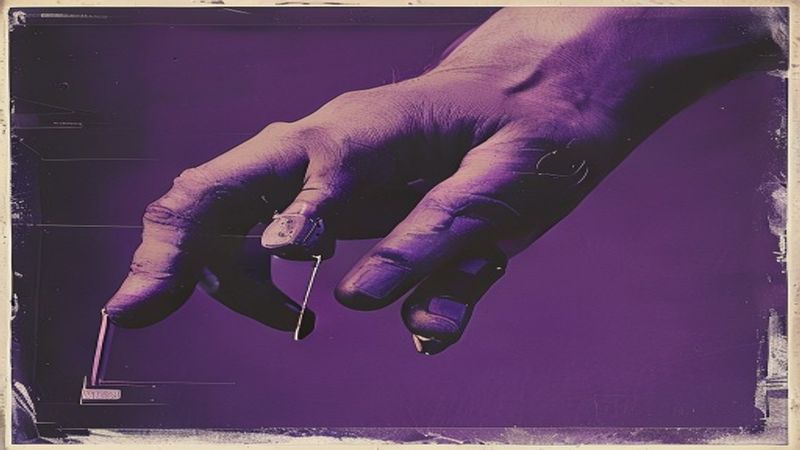
In March 2020, I sat in a university library in Sheffield with a catalogue from the V&A — the Victoria and Albert Museum in London — open on my lap. I was looking at early typewriter prototypes. The Malling-Hansen Writing Ball, designed in 1865 by Rasmus Malling-Hansen, a Danish pastor who ran the Royal Institute for Deaf and Hard of Hearing Students in Copenhagen. He built it for his students. Blind and deaf students who needed to write without seeing the page. The keyboard was a hemisphere of brass pins. You pressed down and the letter struck paper wrapped around a cylinder underneath. It was beautiful. It was fast. Friedrich Nietzsche, a famous German philosopher, owned one. It changed how he composed sentences — shorter, more percussive. Scholars have written about what the Writing Ball did to Nietzsche’s prose. Almost nobody writes about why the Writing Ball existed.
The V&A holds design objects whose origin stories are constraint stories. Someone couldn’t use the standard tool, so someone else built a different one, and then the different one turned out to be better for everyone. The OXO Good Grips peeler, designed by Sam Farber in 1990 after watching his wife Betsy, who had arthritis, struggle with a metal-handled peeler. Smart Design built the fat rubber handle. It won awards. It sold millions. It is in museum collections now. The arthritis is a footnote.
This is not a coincidence. This is a pattern.
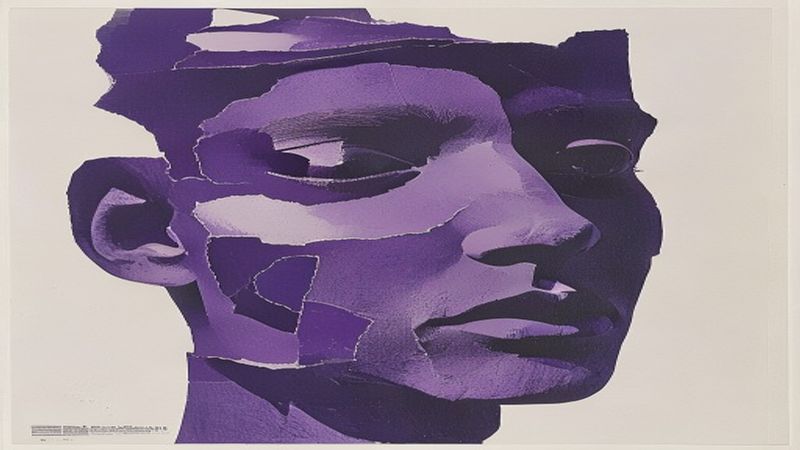
The V&A East’s opening rhetoric leans hard into inspiration. Creative transcendence. The spark that turns a young person into a genius. The reviewer loved it. The five-metre sculpture outside — Thomas J Price’s amalgam of local faces — is “generic by design.” I find that phrase extraordinary. A museum that wants to fire up singular genius has placed a deliberately average figure at its entrance. The contradiction is right there. Nobody mentions it.
Here is what I notice, the thing my pattern-matching brain will not let go of: the genius myth requires forgetting where the innovation came from. Specifically, it requires forgetting the body that couldn’t do the thing the standard way. Donna Haraway, a scholar who writes about technology and society, wrote in her 1991 work called the Cyborg Manifesto that the boundary between tool and body was always political, never natural. She was talking about something else. She was also talking about this.
The curatorial frame of genius is a clean room. No friction. No awkward process. No twenty-seven failed attempts. Your hands don’t grip the way standard tools expect. Your eyes don’t track the way standard designs assume. Your brain sequences information in a different order. Yet the clean room produces the myth that innovation comes from talent alone, not from the messy reality: constraints, determination, and years of work.
I know this because my best work — the actual best analytical work I have done — came out of building elaborate workarounds for things other people do automatically. In May 2023, I spent three weeks building a spreadsheet to track my own energy patterns because I couldn’t rely on internal signals the way colleagues seemed to. The spreadsheet revealed a 90-minute cycle nobody had told me about. It changed how I scheduled everything. A colleague saw it and asked if she could use it. She did. She told people she’d found a great productivity hack. The origin — that I built it because I was failing at something basic — evaporated.
The spreadsheet became a hack. The Writing Ball became a typewriter. The fat-handled peeler became good design. Each time, the disabled body that generated the constraint disappeared from the story. Not erased maliciously. Just not interesting enough to keep in the frame.
Museums decide what counts as lineage. When the V&A East places a Balenciaga gown next to a photograph next to a piece of circuit board and says these are all connected by creative genius, it is drawing a line. Lineage is a choice. The mathematics of preservation — what a collection keeps, what it lets decay — is never neutral. Choosing to frame the Writing Ball as “design innovation” rather than “assistive technology that became design innovation” is not a lie. It is a crop. The thing outside the frame is still there. You just can’t see it in the gallery.
You might say: but the museum can’t label everything. True. But the genius frame is not neutral absence. It is active selection. It selects for the individual mind and against the constrained body. Every time.
I am not asking the V&A East to add disability labels. I am noticing that the story they chose to tell could not exist without the bodies they chose not to mention.
The Writing Ball sits in a glass case, brass pins facing up, waiting to be touched by hands that will never come.
This article was prompted by V&A East collection review – a dazzling wealth of inspiration to fire up the geniuses of the future from Guardian Art & Design.