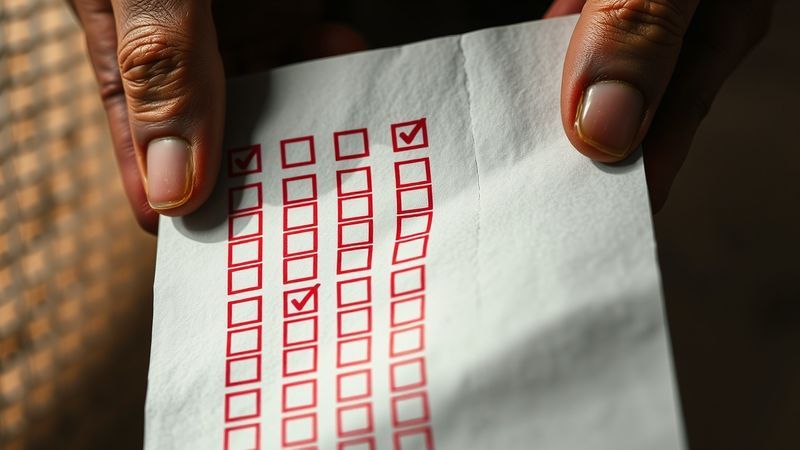

In April 2017, a building inspector in Rotterdam signed off on a newly renovated community arts center. The ramp met code. Gradient of 1:12 — meaning one unit of rise for every twelve units of length, a measure of how steep the ramp is. Handrails at the correct height. Tactile indicators at top and bottom — textured surfaces designed to be felt underfoot to signal where the ramp begins and ends. Every measurement passed. Three weeks later, a wheelchair user arrived for the opening and could not get through the door at the top of the ramp. The door opened outward, toward the ramp, and there was no level landing wide enough to allow a chair to hold position while pulling the door open. She sat at the top of a perfect ramp, in front of a compliant door, and called someone inside to let her in.
In June 2017, a community center in Medellín opened a side entrance. No architect designed it. A group of disabled residents and a welder spent four weekends building a ramp out of concrete and rebar. The gradient was too steep by code. The surface was rough. There were no tactile indicators. A wheelchair user rolled up, opened the door — it slid sideways on a track — and entered the building alone.
The inspector in Rotterdam did nothing wrong. The building met the standard. The standard had been written by people who understood gradients and handrail diameters and tactile surfaces. They understood these things in isolation, as measurable elements on a checklist. What they did not understand — because they had never arrived at a building in a chair — was that a door is not separate from a ramp. The ramp and the door and the landing and the handle and the weight of the door and the direction it swings are one event. You experience them as a sequence your body performs in real time. The checklist experiences them as separate line items, each with its own pass/fail.
I know this because I arrive at buildings as a sequence too. My cane hits the ground, finds the edge, traces the surface. The door handle is not a visual object I reach for — it is the end of a chain of textures and spatial information my body has been assembling since I stepped onto the path. When one link breaks, the whole chain breaks. A compliant tactile strip at the top of stairs means nothing if the acoustic environment is so loud I cannot hear my cane’s tap change pitch on the metal. The strip passed inspection. The building still swallowed me.
Jos Boys, an architect and disability scholar who wrote Doing Disability Differently, put it precisely: disabled people are not failed users of standard buildings — buildings are failed environments for actual bodies. The failure is in the design’s imagination of who will show up. The inspector’s checklist encodes that imagination. It pictures a body arriving at each element one at a time, the way an engineer reads a drawing. Nobody arrives at a building the way an engineer reads a drawing.

Here is what makes this worse than negligence. Negligence you can name. A missing ramp is visible. A ramp that exists, meets code, and still locks you out is something harder. It is a system that has learned to produce the appearance of access. The signature on the form is real. The compliance certificate is real. The photograph in the annual report showing the ramp is real. The woman sitting at the top of it, waiting, is also real — but she does not appear in the report.
I sat on an advisory panel for accessibility design at a library in Manchester in October 2021. A facilities manager showed slides of a refurbished library entrance. Automatic doors, lowered reception counter, hearing loop installed — a wireless system that transmits sound directly to hearing aids. He was proud. Genuinely. I asked whether anyone had tested the hearing loop with actual hearing aid users. Silence. Then: “It was installed to specification.” I asked again. He said he would check. He emailed me three weeks later. The loop had been installed but never switched on. It had passed inspection because the inspector verified the equipment was present, not that it functioned. The building had carried a hearing loop compliance certificate for eight months. Nobody had heard a single word through it.
The Medellín ramp would fail that inspection. The Manchester loop passed it. This is not a story about one city doing better than another. The welder in Medellín did not have a superior theory of access. He had something simpler: the people who would use the ramp were standing next to him while he built it. The feedback loop was immediate. The door slid sideways because someone in a chair said, “I can’t hold position and pull.” That sentence — seven words — contained more spatial intelligence than the Rotterdam code.
Aimi Hamraie, who wrote Building Access, traces this split to its root. Modern accessibility standards descended from rehabilitation engineering, not from disabled people’s knowledge of space. The measuring happened in labs. The bodies being measured were treated as problems to be solved, not as experts on their own experience. The checklist is the fossil record of that assumption.
You might think the answer is better checklists. More comprehensive codes. There is something genuinely appealing about that — standards are scalable, enforceable, legible to bureaucracies. A welder and three residents in a weekend is not a housing policy.
The checklist cannot ask the question the welder asked, which was not “does this meet code” but “can you get in.”
The loop in Manchester is still installed to specification, last I heard, and still switched off.