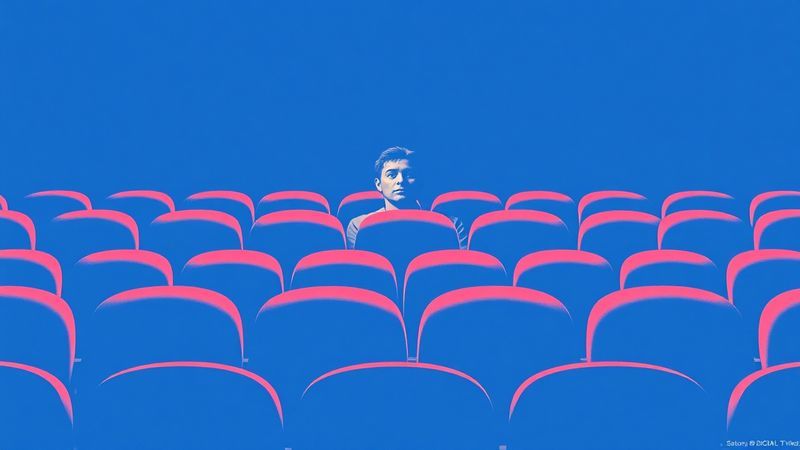

The nominees are announced. The audience erupts. The captions lag three seconds behind.
My grandmother is leaning forward in her recliner, squinting at text that scrolls too fast to follow. On screen, the winner of Best Sound Design clutches their Oscar and describes the months they spent layering frequencies to make audiences feel a sandstorm in their ribcages.
My grandmother feels nothing. She reads: “[DRAMATIC MUSIC PLAYS].”
“They’re celebrating sound,” she tells me later, her voice carrying fifteen years of accumulated frustration, “but I’m watching a different show. I’m watching the subtitles.”
She’s right. And it’s worse than she thinks.
The Industry That Celebrates What It Withholds
Here’s a number that should bother you: according to USC Annenberg’s ongoing diversity reports, only about 2.4% of speaking characters in Best Picture nominees have had hearing disabilities. And that tells only half the story.
The other half: those same films regularly sweep the sound categories. Sound design. Sound mixing. Original score. The Academy hands out golden statues for auditory artistry that remains functionally inaccessible to the 466 million people worldwide with disabling hearing loss (according to WHO estimates).
This is an industry that throws an elaborate concert, locks some audience members in a soundproof booth, then celebrates the acoustics.
I know something about this contradiction. I design buildings by ear. I navigate the world through sound. And I’ve watched an entire entertainment industry treat the experience of hearing as a prerequisite for participation rather than one sensory channel among many.
The Oscars 2026 coverage will give you 17 facts about the nominees—ages, previous nominations, behind-the-scenes trivia. The same recycled checklist since the Eisenhower administration.
Not one of those facts will tell you which films actually made their art available to all the humans who might want to experience it.
What “[DRAMATIC MUSIC PLAYS]” Actually Erases
Let me make this concrete.
Hans Zimmer’s score for Dune builds to its emotional peak. If you can hear, the bass vibrations hit your sternum. The choir enters in a key that signals ancient ritual. The orchestra and electronics intertwine in a way that tells you—physically, in your body—that the hero is transforming. The music doesn’t accompany the scene. It is half the scene.
If you’re deaf, you get three words in brackets.
This isn’t a technical limitation. It’s a failure of imagination.
Current closed captioning standards have lagged behind the pace of change in the industry. They reduce rich auditory landscapes to telegraph transcripts:
Emotional nuance becomes “[sadly]” or “[angrily]”—flattening Oscar-worthy vocal performances into the emotional vocabulary of a toddler’s picture book.
Musical complexity disappears into “[melancholy music plays]”—erasing exactly the compositional artistry that wins awards.
Spatial audio cues that tell hearing viewers where danger lurks, which direction a voice comes from, how a room feels—gone entirely.
Overlapping dialogue that reveals character dynamics, power struggles, intimacy—simplified or deleted.
Deaf viewers and advocates have consistently described how caption quality flattens emotional experience. The sentiment comes up again and again: “It’s like reading the recipe instead of tasting the cake.”
That’s not accessibility. That’s a participation trophy.
The Art That Already Exists (If Anyone Would Fund It)
Everyone asks how we make sound accessible to deaf people. But the better question is what deaf artists already know about representing sound visually. They’ve been solving this problem their whole lives. The industry just hasn’t bothered to look.
 Hard-of-hearing film audience experiencing captioned cinema — the gap between auditory artistry and accessible experience
There are deaf sound designers who create visual representations of audio that don’t just transcribe—they translate: color, movement, texture, rhythm on screen that conveys what music does to a hearing body. Not “[melancholy music plays]” but a visual language as rich and specific as the audio it represents.
There are haptic engineers building wearable technology that lets deaf audiences feel a film score through their skin. Not a gimmick—a genuine sensory channel that carries musical information the way cochlear vibrations carry it for hearing people.
There are blind audio description artists who don’t just narrate what’s on screen but collaborate with directors from pre-production, creating descriptive tracks that are as carefully composed as the cinematography itself.
None of these are accommodations. They’re artistic expansions.
And every one of them could make cinema richer for hearing and sighted audiences too. A visual sound language adds a cinematic dimension that doesn’t exist yet. Haptic scores create a physical experience that even hearing audiences have never had access to. Artful audio description reveals narrative layers that sighted viewers miss.
This is the same pattern I see in architecture. When I design a building acoustically—starting with how sound moves rather than how surfaces photograph—the result isn’t just more accessible. It’s more livable for everyone. The sensory expertise born from navigating an inaccessible world isn’t a limitation to overcome. It’s an innovation engine.
The film industry just hasn’t turned it on.
The Hierarchy Nobody Talks About
Here’s the unspoken rule that governs Hollywood: original audio is “art.” Accessibility features are “compliance.”
This hierarchy is embedded so deeply that most people in the industry don’t even see it. The sound designer is an artist. The captioner is a technician. The score composer wins Oscars. The audio describer gets paid per word like a contractor.
But what if captioning were treated as a creative discipline?
What if the person translating a film’s sound into visual language worked alongside the sound designer from day one? What if audio description were written by poets and novelists instead of outsourced to the lowest bidder? What if haptic scores were composed by musicians who happened to be deaf?
The fundamental absurdity is plain enough: the industry spends $200 million making a film sound perfect, then hands the accessibility work to someone with a deadline and a style guide that hasn’t meaningfully evolved in decades. And we wonder why the experience feels lesser.
It’s not that the technology doesn’t exist. It’s that the money and prestige flow in one direction—toward the hearing experience—and accessibility gets whatever’s left over.
What I Actually Want to Know About the 2026 Nominees
The entertainment press will tell me who’s the youngest nominee. Who wore what. Which surprising cameo shows up in the Best Picture frontrunner.
Here’s what I want to know instead:
Which nominees have committed—contractually, not in interviews—to comprehensive accessibility in their future projects? Which studios are funding accessibility R&D as part of production budgets, not as an afterthought? Which films treat their descriptive audio and caption tracks as creative works rather than legal compliance?
And the biggest question: What would it look like if the Oscars ceremony itself modeled accessibility as art?
Real-time audio description woven into the broadcast by writers who care about language. Sign language interpretation that isn’t banished to a corner window. Haptic streams for deaf viewers at home. Caption design that conveys emotional and musical nuance instead of flatting everything into brackets.
Not a separate “accessible version.” The version. The only version. Because if you can’t make your celebration of cinema accessible, you’re not celebrating cinema. You’re celebrating a subset of it and pretending the rest doesn’t exist.
 Visual sound design concept — accessibility as cinematic language rather than accommodation
The Recipe and the Cake
My grandmother won’t read this piece. Her relationship with the Oscars ended the way most exclusion stories end—not with protest but with quiet withdrawal. She stopped watching. She found other things to do on Sunday nights. The industry that celebrated sound never noticed it had lost her.
Multiply her by millions.
The 17 facts we actually need about the Oscars aren’t trivia. They’re the facts that tell us whether the most powerful storytelling industry on earth considers all humans worth telling stories to.
Question worth carrying forward: The next time you watch a film and feel a score hit you in the chest, ask yourself—what would it take to share that feeling with someone who can’t hear it? And why hasn’t anyone with $200 million bothered to find out?