The departure board flickers. 2:47 PM becomes 2:?? PM becomes ERROR becomes blank.
I’m standing in Union Station, Toronto’s transportation cathedral, and a thousand commuters are navigating by ear. Gate changes crackle through overhead speakers. A delay announcement ripples through the crowd — heads lift, bodies pivot, people redirect themselves toward platform 4.
I catch none of it.
I’m deaf. So I’m watching the departure board like my train depends on it. Which it does.
And the board just died.
Here’s what happens next: hearing commuters adjust seamlessly, carried by the current of spoken information. I start walking — fast — looking for a staff member, a secondary screen, anyone making eye contact. I find a conductor. I point at my ear, then at the blank board. He shouts at me. Slowly. As if volume were the issue.
This building was designed by people who think information travels through air.
But I know something they don’t. I know what information looks like when it has to survive on surfaces alone. And what I see in this station — in almost every station — is visual bedlam.
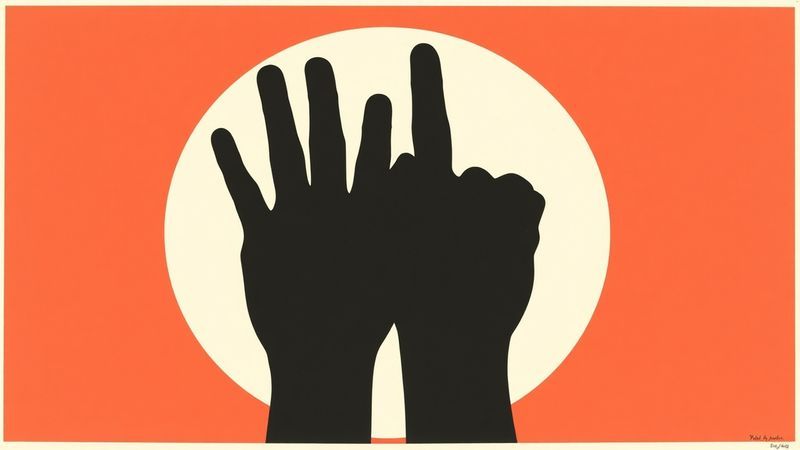 Union Station seen through deaf eyes — competing visual hierarchies, inconsistent signage, and information overload in a space designed for hearing navigation
The Exhibition That Proved Its Own Point
A few weeks later, I visited an exhibition exploring the complex, often absurd journeys disabled artists take just to reach institutional spaces, presented at Tangled Arts in Toronto. The artwork traced real routes through Toronto’s transit system — the workarounds, the triple-planning, the contingency maps that disabled people carry in their heads before they ever leave home.
It was brilliant. It was also, ironically, hard to access.
The gallery lighting made lip-reading difficult. Visual clutter competed for attention in ways that would overwhelm any neurodivergent visitor. The information about the artwork assumed you could process it the way a neurotypical, hearing, sighted person would.
An exhibition about access barriers had its own access barriers. Not because anyone was careless. Because the design assumptions that make spaces hostile to disabled bodies are so deeply embedded that even people actively thinking about disability reproduce them.
That’s not irony. That’s a system.
Deafness Taught Me to Read Buildings
Here’s what hearing people don’t understand about visual processing: when you can’t rely on sound, your brain doesn’t just lose a channel. It rebuilds the remaining ones.
I catch the microsecond delay between a digital sign refreshing and its brightness shifting. I read the subtle head-turns of confused commuters the way a meteorologist reads pressure systems — they tell me exactly where the information architecture has failed. I notice when an emergency exit sign carries the same visual weight as a coffee shop logo, because for me that distinction could be the difference between safety and danger.
This isn’t compensation. This is expertise.
And this expertise reveals something that affects far more people than the deaf community: most public spaces are visually illiterate.
Stand in any major transit hub and count the signs visible from a single position. I’ve done this in Toronto, London, New York, and Tokyo. The average is seventeen. Seventeen competing visual signals fighting for your attention in one sightline. Departure times in one font. Wayfinding in another. Advertisements mimicking the color palette of safety signage. Color-coded transit lines that assume you can distinguish “navy blue” from “midnight blue” at forty feet.
For hearing commuters, this visual chaos is merely annoying — sound fills the gaps. For deaf passengers, it’s a wall.
 Deaf designer reading the visual grammar of a transit space — catching the microsecond delay in digital sign refresh, the subtle head turns marking where information fails
The Numbers Behind the Noise
Deaf and hard-of-hearing passengers on systems like the London Underground routinely miss critical service announcements because visual displays are inconsistent, delayed, or simply absent. The information system in most major transit networks essentially runs two parallel networks — a rich, real-time audio layer and a sparse, unreliable visual one. Deaf passengers are expected to navigate on scraps.
The fix wasn’t louder speakers.
Tokyo Metro took a different approach. When they redesigned their wayfinding system, they brought disability communities into the process from day one — not as testers at the end, but as co-designers at the beginning. The result: wayfinding errors dropped significantly across all passenger groups. Not just disabled passengers. Everyone.
That deserves to sit with you for a moment. Fewer errors for everyone. Because designing for the margins made the center work better.
The artists in that Tangled Arts exhibition documented something that disabled people know intimately: disabled people routinely spend two to three times longer planning routes than non-disabled peers. Not because of physical barriers alone, but because the information environment treats them as an edge case in their own city.
The Machine That Reproduces Itself
Why does this keep happening? Not because designers are cruel. Because the design process itself has a disability.
It starts with the myth of the average user — that neurotypical, hearing, sighted, able-bodied phantom who haunts every design brief. No one has ever met this person. They don’t exist. But every transit system in the Western world is built for them.
Then comes the aesthetic trap. Clean, minimalist design — the kind that wins awards and fills architecture magazines — often strips away exactly the visual redundancy that disabled people rely on. That sleek sans-serif sign with elegant negative space? Beautiful in a portfolio. Invisible at thirty feet to someone scanning for survival information.
Then compliance. Designers meet the legal requirements — the ADA checklist, the AODA standards — and call it done. But compliance without comprehension produces spaces that are technically accessible and practically hostile. A ramp that meets code but faces the wrong direction. A visual alert system installed but never maintained. The departure board that exists but displays information in fonts too small to read from the platform.
And finally, the expertise hierarchy. Disabled people get consulted — if they’re lucky — as “test subjects” at the end of the process. Never as lead designers at the beginning. The people with the deepest embodied knowledge of how spaces fail are treated as edge cases rather than primary experts.
This creates a feedback loop that reinforces itself. Inaccessible spaces drive disabled people away. Fewer disabled people in spaces means fewer complaints. Fewer complaints means designers assume the system works. The absence of disabled bodies becomes its own justification.
What I’d Build Instead
When I redesign information environments, I don’t start with what looks good. I start with what a body needs to know, in what order, under what conditions of stress and motion.
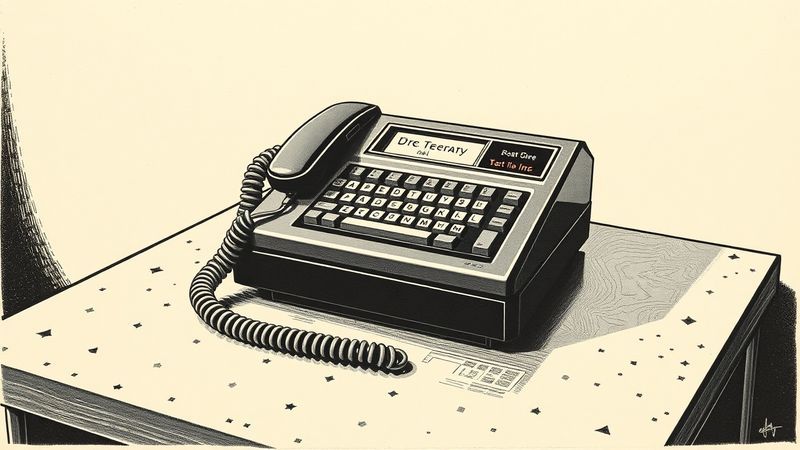 Universal design in practice — visual information hierarchy creating clear wayfinding that serves deaf, neurodivergent, and all users equally
Visual hierarchy that respects cognition. Emergency information at the top of every perceptual pyramid. Wayfinding second. Service information third. Advertising dead last. Consistent typographic scales so your brain learns the system once and reads it forever. Critical information placed at consistent heights so your eyes know where to look before your conscious mind engages.
Cognitive breathing room. George Miller’s 1956 paper “The Magical Number Seven, Plus or Minus Two” established the well-known limit on how many information chunks humans can process simultaneously — and that limit should govern every sightline in public space. If you can see seventeen signs from one position, you’ve built a cognitive assault, not a navigation system. Progressive disclosure: show the essential information first, reveal details on demand.
Multi-sensory redundancy without sensory competition. Every critical piece of information available in at least two modes — visual and tactile, auditory and visual. But never stacked on top of each other. Flashing lights AND blaring alarms simultaneously don’t create redundancy. They create panic.
And the one that changes everything: deaf designers, blind designers, wheelchair-using designers, neurodivergent designers at the table from the first sketch. Not as consultants. Not as testers. As lead designers. Paid as experts. Present from brainstorm to ribbon-cutting. With ongoing feedback loops, not one-time check-ins that produce a report no one reads.
The Station Hasn’t Changed
I still pass through Union Station. The departure board still flickers. The wayfinding still assumes I can hear. The information architecture still treats my primary sense — vision — as a secondary channel.
But I’ve stopped seeing these as small failures. Every misaligned sign, every flickering board, every colour system designed without contrast testing — these are arguments. They’re arguments about who public space is built for. About whose body counts as default. About whose expertise matters.
Deaf designers don’t need special consideration. We need something much more radical than that.
We need to be recognized as the information architects we already are.
The expertise I’ve developed navigating systems designed to exclude me isn’t a workaround. It’s a body of knowledge about how humans actually process spatial information — knowledge that makes transit systems work better for commuters with ADHD, for elderly passengers with declining vision, for tourists who don’t speak the local language, for parents managing children and luggage and stress.
When Tokyo Metro let disabled communities lead their redesign, errors dropped significantly for everyone. That’s not accommodation. That’s innovation.
Question worth carrying forward: The next time you’re in a transit station, close your eyes for thirty seconds. When you open them, notice what you see first. Is it the information you need — or seventeen things competing to distract you from it?