The first thing I noticed was his hands. Then I noticed why I noticed.
I was fourteen, sitting in my friend Leo’s dark bedroom, both of us autistic, watching an actor play a character with cerebral palsy. Critics called the performance “transformative.” Awards season did its thing. And Leo, in that flat autistic register that bypasses sentiment and exposes structure, said:
“Watch his hands. He’s trying to remember how to hold them.”
Leo’s cousin Javier has CP. When Javier moves, there’s a fluid economy to it — a lifetime of neural adaptation compressed into motion so efficient it looks like choreography. Javier doesn’t think about his hands. His nervous system solved that problem years ago.
The actor was performing a calculation. Javier was running an operating system.
That distinction broke open everything I thought I understood about expertise, simulation, and why Hollywood keeps spending fortunes to manufacture what already exists in human bodies it refuses to hire.
The Latex Budget Problem
Last year, a studio poured millions into prosthetic makeup for a film about a disabled veteran. Hours of daily application. A team of assistants to help the actor navigate his costume. Custom latex pieces replaced on a rotating schedule.
Disabled actors who auditioned received form letters: “Going in a different direction.”
That direction was expensive. And I can tell you exactly what it bought — because spotting this kind of systemic waste is what I do for a living.
I design software interfaces. My autism gives me a specific professional advantage: I see where systems generate friction. Every unnecessary click, every bewildering menu structure, every inconsistent interaction pattern creates what designers call “cognitive load” — the mental energy users burn just navigating bad design before they can do whatever they came to do.
Hollywood’s prosthetic performances create the same tax. But instead of bad menus, it’s bad bodies.
When disabled viewers watch an actor wearing our reality as costume, we’re not consuming entertainment. We’re performing unpaid labor:
Decoding layers — separating the character’s choices from the actor’s mechanical limitations. Spotting seams — noticing where latex ends and skin begins, where rehearsed tremors fall out of rhythm. Measuring gaps — calculating the distance between Hollywood’s version of a body and the one we actually live in. Managing the uncanny — processing the strange vertigo of watching your own experience worn by someone who will wash it off tonight and go to dinner.
The actor concentrates on holding his hands “correctly.” We’re stuck analyzing why he’s concentrating on it at all. Entertainment becomes work.
This is the cognitive tax of inauthenticity. Disabled audiences pay it every time. Nobody reimburses us.
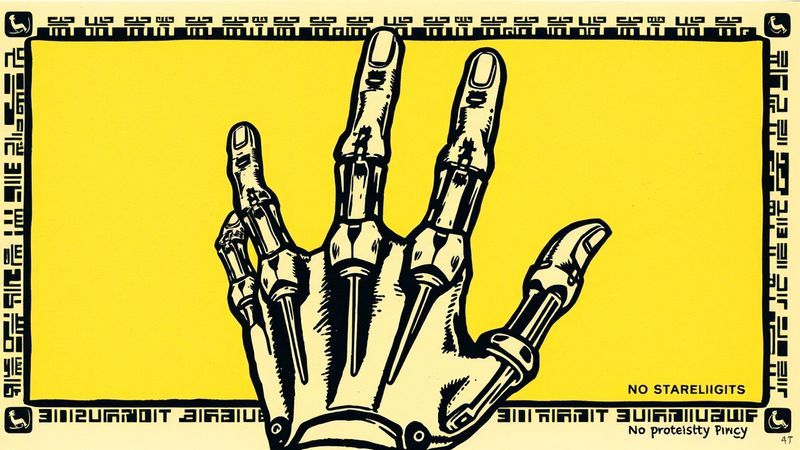 The prosthetics paradox — a camera lens framing authentic disability performance versus constructed simulation
What My Brain Does That Hollywood Doesn’t
There’s a popular idea that autistic people are “pattern-seeking.” It’s more precise to say we’re pattern-dependent. We rely on patterns to navigate a world that wasn’t designed for our processing style. Miss a pattern, and the system breaks down. Notice a pattern others miss, and you see the architecture underneath everything.
So here’s the architecture I see inside Hollywood’s approach to disability:
Prosthetics are preferred because they’re controllable.
Makeup departments manufacture the “right” kind of disability — cinematic, symmetrical, photographable. They calibrate tremors to match frame rates. They design wheelchairs that complement color palettes. They build bodies that perform disability without containing any of its knowledge.
Real disability is messier. It varies day to day. It doesn’t always hit its mark. It has rhythms and workarounds and micro-adaptations that can’t be scripted because they weren’t learned from a reference sheet — they were built, slowly, through decades of negotiation with a world that wasn’t expecting you.
But that messiness is exactly where the expertise lives.
A wheelchair user doesn’t just “use a wheelchair.” They’ve developed a spatial intelligence that reshapes architecture in real time — doorway widths assessed at a glance, floor surfaces read the way a sailor reads currents, social spaces evaluated for exit strategies before they even register as rooms. An actor with CP doesn’t just “have tremors.” They’ve built movement economies so sophisticated that biomechanics researchers study them for insights into neural efficiency.
You can’t apply this with latex. You can’t absorb it in three weeks of “method preparation.” It’s not a skill set. It’s a nervous system.
The Ghost Story of Bankability
Studios justify prosthetic casting with a single word: bankability. The familiar star guarantees returns. This sounds like business strategy.
It’s actually a refusal to look at data.
When you compare films that cast authentically against those that rely on prosthetics, the pattern holds: authentic casting tends to cost less in production. Disabled audiences report greater emotional engagement. And — here’s the part that should end the conversation — no meaningful box office penalty exists for casting disabled actors in disabled roles.
The bankability argument is a ghost story the industry tells itself to avoid building new infrastructure.
And those prosthetics budgets? The money spent on a single star’s latex application schedule could fund disability consultants across an entire production slate. Could create apprenticeship pipelines for disabled performers. Could retrofit studios for accessibility. Or — and this is where my pattern-recognition brain lights up — could invest in the systemic changes that make authentic casting routine instead of exceptional.
Hollywood thinks it’s buying authenticity. It’s actually buying control — the ability to shape disability into something symmetrical, predictable, and removable at wrap.
Control is expensive. Not just financially. Artistically. Cognitively. Humanly. The industry just hasn’t learned to count those costs yet.
The Inside View
Years after that night in Leo’s bedroom, I consulted on a video game. The developers had built an autistic character: stilted eye contact, monotone voice, “special abilities” with numbers. Research had been done. The DSM had been consulted. Movies had been watched.
I sat across from the lead designer and said: “Autistic people don’t have trouble with eye contact. We have trouble with the cognitive load of eye contact while simultaneously processing language.”
He looked confused.
“When I look at your eyes,” I said, “I’m burning processing power that could be decoding your words. So I choose: understand what you’re saying, or perform the social ritual of looking at you while you say it. I choose understanding.”
“But in the movies —” he started.
“In the movies,” I said, “they show what autism looks like to neurotypical observers. The surface behaviors. I’m telling you what it feels like from inside the system. The architecture beneath the symptom.”
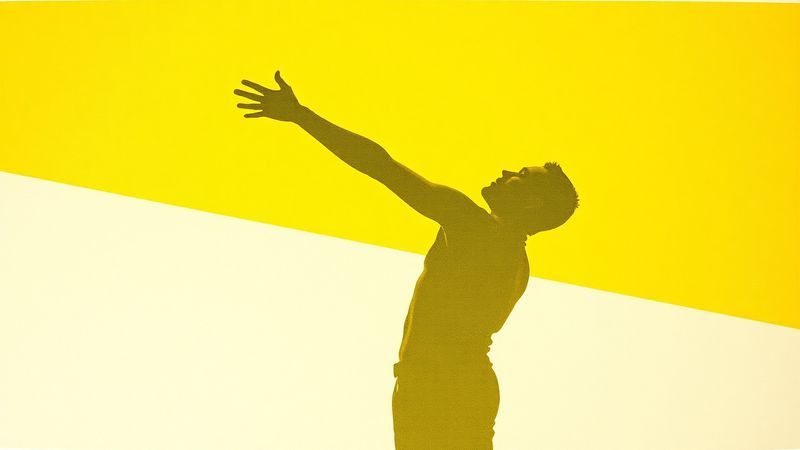 Disabled actor on stage without prosthetics — authentic performance that audiences register as real at a neurological level
That exchange is the prosthetics paradox in miniature. The difference between how something looks from outside versus how it operates from inside. Between observing a pattern and living within it. Between wearing a costume and running a nervous system.
The developers redesigned the character. They hired an autistic writer. The result wasn’t just more accurate — it was more interesting. More surprising. More human. Because the inside view always contains information the outside view can’t access.
This is true in games. It’s true in film. And it’s true everywhere systems are built by people who study a problem from the outside instead of hiring someone who navigates it daily.
Redesigning the System
I think about systems all day. Bad ones create friction. Good ones disappear. The best ones feel so natural you forget they were designed.
Hollywood’s casting system has the same problems as bad software: it simulates instead of including. It prioritizes familiarity over expertise. It funds elaborate workarounds instead of building accessible infrastructure. And it excludes the users who could tell you exactly what’s broken.
Here’s what a redesign looks like:
Treat disabled actors as expertise hires, not diversity gestures. No studio would cast a non-pilot to play a fighter pilot without extensive technical consultation. Disability is expertise. The body that spent decades navigating a world not built for it carries knowledge no research montage can replicate.
Bring disability consultants into pre-production — for system design, not accuracy checks. Not “does this wheelchair look right?” but “how would this character have adapted over twenty years? What invisible labor do they perform daily that the script never mentions but the audience will feel in their bones?”
Redirect budgets from simulation to accommodation. Accessible sets cost less than prosthetic departments. Flexible scheduling is standard production planning in every other industry. The money is already in the system. It’s just being spent on latex.
Treat disabled audiences as quality assurance. We’re not complaining when we point out what’s wrong. We’re debugging. Our feedback identifies exactly where simulations break down, where patterns fail to match reality, where the hands look wrong because someone is trying to remember how to hold them.
What Expertise Actually Is
I keep coming back to Javier’s hands. The economy of his movement. The way decades of adaptation had been compressed into something that looked effortless — not effortless as in easy, but effortless as in: the effort had already been done. The system was built. The patterns were established. The knowledge lived in his body the way language lives in yours.
That’s what expertise is. Not something you study for a role. Something you carry in your nervous system.
It can’t be applied with makeup and washed off at night. It accumulates in bones, muscles, neural pathways — wisdom distilled from years of navigating systems that weren’t designed for you. It’s the reason Javier’s hands look like choreography and the actor’s hands look like homework.
When Hollywood stops buying latex and starts hiring the people who carry this knowledge, it won’t just get better disability representation.
It will get better art. Because the inside view is always richer, stranger, and more human than any simulation. And the audience — disabled or not — registers the difference, even when they can’t name it.
Leo could explain it. He was fourteen, and he saw it instantly.
The hands were wrong. Not because they looked wrong. Because they were thinking.